Stevedoring, relocation & equipment lifting
The last stretch a machine travels is often only a few dozen metres — from the plant gate to the foundation — and it is the hardest one. The crane cannot get in, the floor will not take the load, and the plant is still running. This is where big equipment stops helping and experience decides the outcome.
How we run it
Survey the floor and the access route
Entry width, headroom, the load capacity of ground and floors, and where equipment could stand if mechanical handling is possible at all.
Scope of service
- Loading, lifting and relocation of machinery and equipment
- Manual relocation into installation position in confined spaces
- Safety supervision at every stage of lifting and lashing
- Full on-site support
Frequently asked questions
- At what weight does a crane become necessary instead of manual handling?
- There is no fixed threshold. It depends on access, on what the floor will carry, and on the placement accuracy required. Machines of several dozen tonnes are still moved by hand when a crane cannot reach them.
- Can you work while the plant is still in production?
- Yes, and it is the common case. The work is broken into steps that can be stopped safely and scheduled into the windows the plant allows, rather than requiring a long shutdown.
- Who is liable if equipment is damaged during the move?
- Condition is inspected and recorded before and after the move. The extent of liability is agreed in the contract according to the value and nature of the equipment — raise it at the quotation stage.
Where a crane cannot reach
Alongside crane and forklift work, we move machinery into its installation position by hand — able to work in confined spaces a crane or forklift cannot get to, such as substations or a plant that is still running.
Placing machinery in its final position inside substations and plants where mechanical equipment cannot reach.
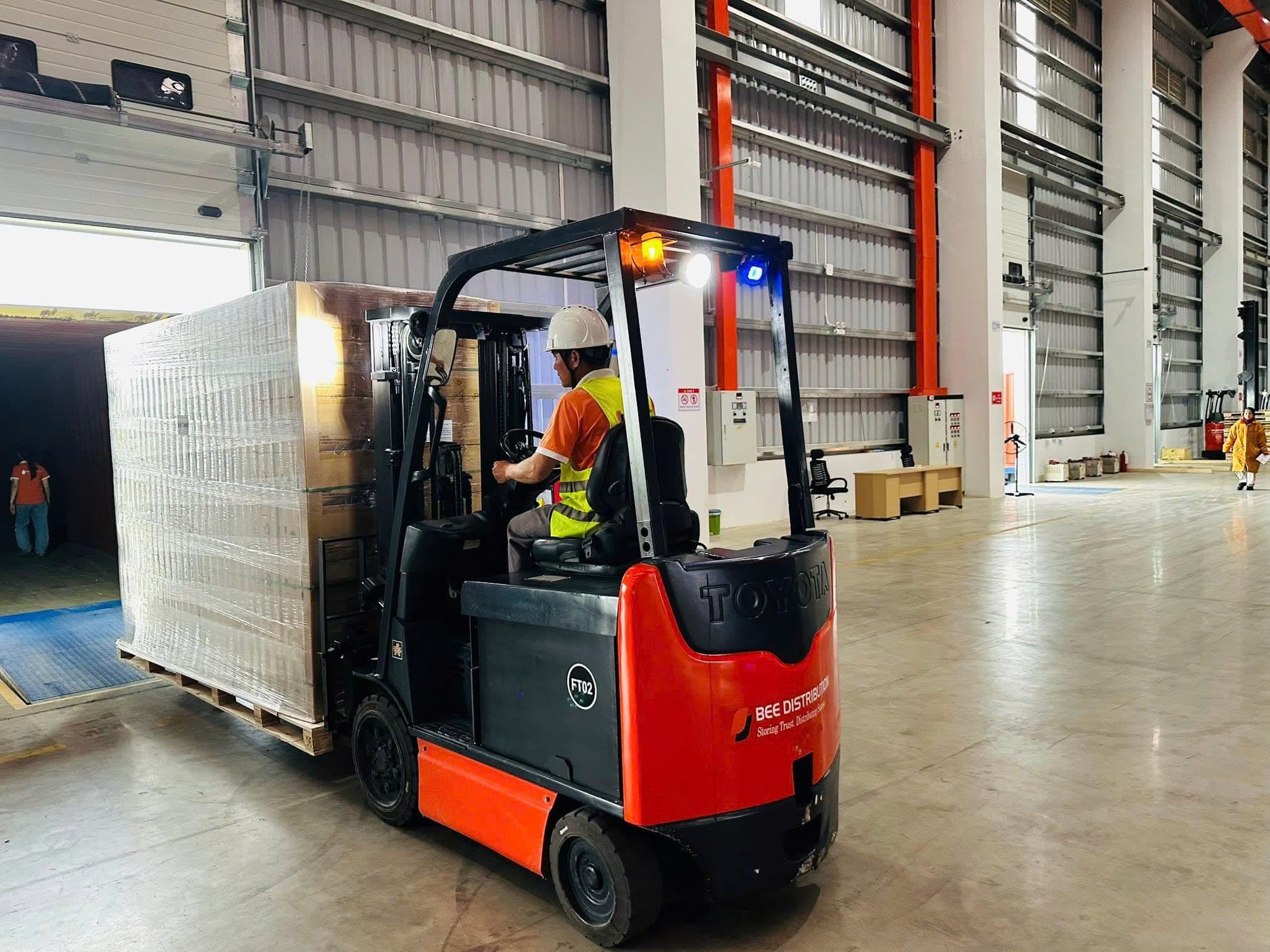
Container stuffing and unstuffing, vacuum sealing, lashing and bracing for cargo such as aircraft engines and microchips — meeting the technical requirements of export freight.
Lifting equipment
Have a shipment to move?
Send us the cargo specifications — we respond with an approach and a quotation within 24 hours.
Get a quote